General Development Economics Tips
Understanding the Application of Development Economics in Real-World Scenarios

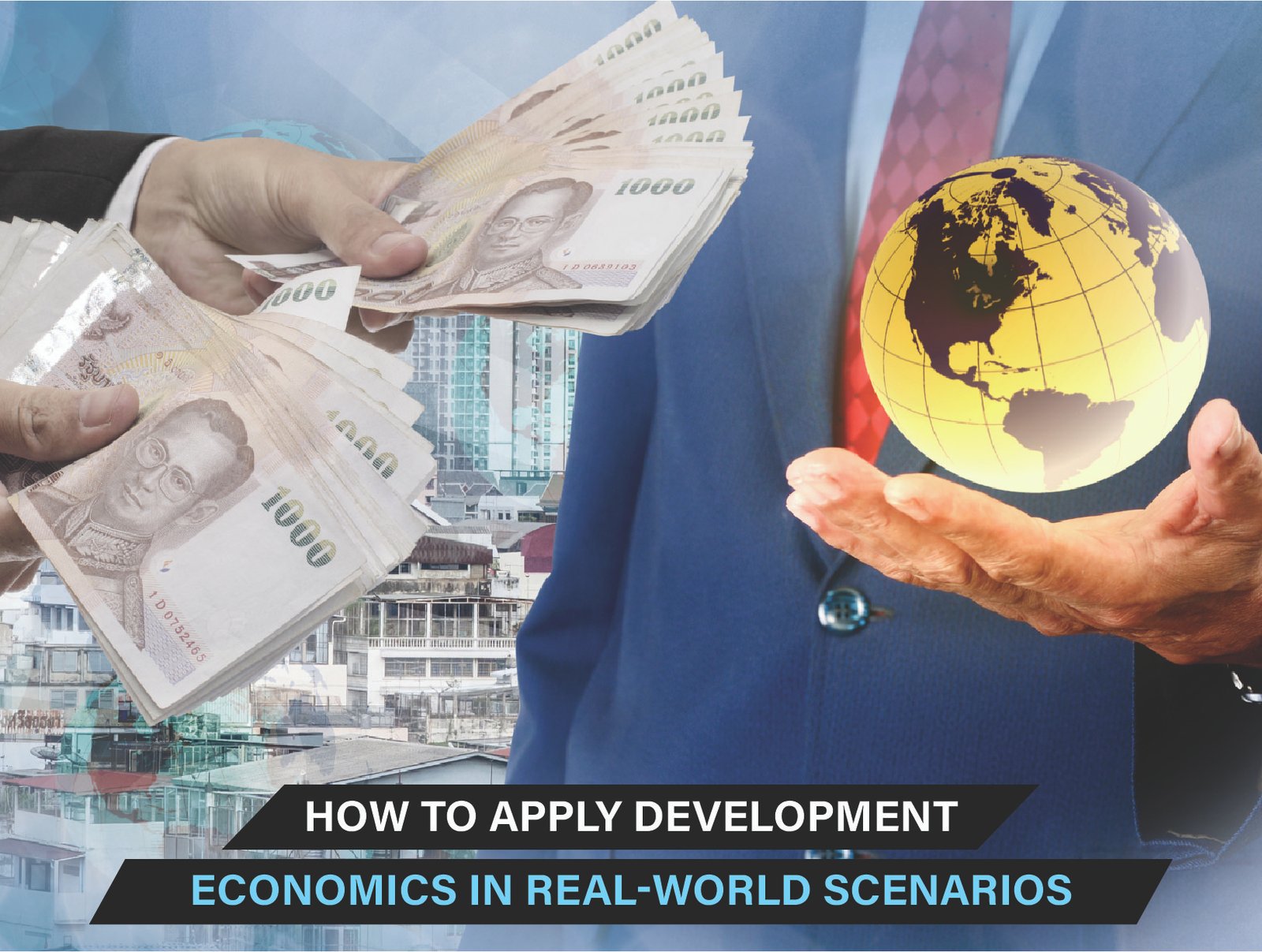
Development economics serves as an essential tool to handle worldwide social issues that include poverty and inequality and economic development imbalances in growth. Policymakers obtain development strategies through the combination of theories including Solow Growth Model and Dependency Theory and Human Capital Theory which they use for targeted strategy development. The models analyse underdevelopment origins to develop appropriate solutions that include educational investments together with infrastructure improvements and trade policy reforms.
Development economics, in practice, helps in making allocation of resources and planning of policies hence interventions are efficient and sustainable. Governments can enhance their health and education investment decisions based on human capital theories which promotes long-term productivity results. Nations that want to minimize their external vulnerabilities must analyse how dependencies work within their system. Through development economics policy makers develop strategies which result in a better standard of living alongside inclusive economic growth and positive results for disadvantaged communities.
Key Theories and Their Real-World Applications
The creation of effective public policy heavily depends on developers’ fundamental comprehension of development economics theories. They serve as reference for the development of development strategies, priority setting for resource allocation and target intervention design. The Solow Growth Model and Dependency Theory provide important traditions in the discussion of the role of capital and technology as mechanisms of growth while focusing on external relationships in a developing economy. It’s been also human Capital Theory that highlights education and health as the driver of growth. The students and practitioners have practical solutions to solve complex problems such as poverty, inequality and unemployment by analysing case studies and empirical data. The use of these analysis methods leads to the creation of educated and expansionary public policies that build better social well-being throughout communities.
Solow Growth Model in Practice
The Solow Growth Model is used by policymakers to explain how capital accumulation, and growth of Labor and technology affect the rate of economic growth. In practice, it guides such investments in terms of infrastructure, education and technology that are central to the future of such development. Through focusing on these areas, the model highlights them as loci for strategies of increasing productivity, raising living standards, and fostering long run economic growth including nascent structural transformation in developing economies.
Addressing Dependency through Structural Reforms
Dependency Theory emphasizes the need to make structural changes to decrease dependence on wealthy nations by the developing economies. Applying this theory would lead the countries to focus on diversifying industries, fostering local economic growth as well as make them self-sufficient. This approach enhances long run economic independence, carves out vulnerabilities to external shocks and complements the sustainable development in a way that enables the developing countries to build a stronger, more resilient economies while lessening the disadvantages of the global inequalities.
Human Capital Development in Economic Policies
A very good example of a human capital theory is the theory that brings into light the role of education, skills, and health in raising productivity. This can be used by the policymakers with the investment in quality education, accessible healthcare and vocational training programs. Investments of such kind fortify the workforce as well as increase an individual’s earning power and foster economic development and growth. An increase in human capital creates competitive and prosperous economic conditions within an economy which depends on knowledge for its progress.
Tackling Inequality with Effective Policies
In development economics, poverty can thus be dealt with through equitable resource distribution (including land), equitable and inclusive growth and efficient social protection programs. Measures such as progressive taxation, targeted welfare schemes, and investment in the under served areas are implemented by the policymaker to curb the income gaps. Social justice, sustainability as well as stability and development are better ensured when economic gains are widely spread across the marginalized in such a way as to balance society and make it more resilient.
Technology and Innovation for Sustainable Growth
The economic development of a nation requires technological advancement. Nations, when adopting development economics principles, can then encourage innovation, provide for better infrastructure and facilitate diffusion in technology. Increased productivity and competitiveness, as well as long term sustainable growth in the various sectors is achieved through this approach. The adoption of technology, by leading to the modernization of industries, creation of high-quality jobs, and fostering overall economic development results in prosperity to all segments of the society.
Implementing Development Economics in Policy Design
Development economics principles can be used by policymakers to craft such targeted policies as are capable of promoting sustainable economic growth. These are innovation policies that cut down social inequalities and engage in the investment of crucial sectors like education, healthcare and infrastructure. Using these tools of development economics, it is possible to evaluate the effectiveness of such investments ensuring that they are being made in the places where it has the most impact. Governments can promote inclusive development, direct efforts and provide equal access to opportunities and resources to marginalized communities to some sort of empowerment. These approaches increase living standards as well as increase economic resilience by ensuring that the benefits of growth also are widely shared. Finally, long term prosperity is set by making these strategies through promoting more equitable and thriving societies for future generations.
Investing in Infrastructure for Growth
Building infrastructure plays a basic role in making an economy successful. The infrastructure sector policies enable effective transport, communication and power operations through boosting job creation for businesses. Investments generate benefits by giving people better market access to resources that boost how efficiently production works and makes businesses more successful. Fundamental infrastructure enables sustainable economic growth to develop thus increasing marketplace connections and resulting in dynamic yet rigid economies that benefit society.
Social Protection Programs for Vulnerable Populations
Protecting people who need the most help during social protection programs is essential. A government should reduce poverty levels while providing job protection and healthcare access because these efforts ensure equality exists even if market results struggle. Social protection networks provide a secure shield that defends human dignity of individuals and families regardless of severe financial problems to help communities stay stable and achieve good lives. A trustworthy social safety system produces communities that handle adversity effectively by delivering equal benefits to everyone.
Encouraging Innovation and Entrepreneurship
The path to sustainable economic growth consists of promoting new inventions and business start-ups. Governments should assist companies through investing money, helping young businesses succeed, and backing scientific study activities. The long-term global market development benefits from sustainable economically competitive business growth. The support of innovation helps economies to handle sudden shocks from market instability and grow successfully amidst global fluctuations.
Reducing Corruption with Strong Institutions
Strong institutions would be fundamental for us to fight corruption and make sure resources reach their ideal use. Development economics proves that better public governance through transparency and accountability creates an honest and working environment. Powerful institutions ease investment and boost public understanding because they manage resources better to create progress. Strong institutions create equal growth with positive results and help keep development and success going long term.
Building Global Trade Networks for Development
Developing countries must set up worldwide trading platforms to enhance their development rates. A country finds ways to join international trade through deals and produce range adjustments with friendly nations. Merging with world trade helps developing countries reduce foreign aid needs and makes better use of global economic opportunities for controlled growth.
Overcoming Challenges in Development Economics
Development economics implementation requires solving problems regarding limited resources and unstable political situations as well as worldwide economic disturbances. The obstacles pose challenges to development yet countries become more capable of overcoming them when focusing on building resilient solutions and developing extended planning strategies. Strategies that invest specifically in resilient structures of infrastructure along with educational development and scientific innovation together with protection systems empower countries to withstand both homegrown and external economic challenges. Strategies developed in this manner protect the most marginalized people while building economic stability. The policies strengthen institutions together with inclusive growth measures which allows countries to continue moving forward despite uncertain times. A resilient economy maintains both strength in facing crises as well as capability for long-term development that results in prosperity.
Addressing Political Instability and Development
Developments operate optimally only when there exists political stability. Development economics helps policymakers create powerful institutions to both protect public stability and strengthen governance and reduce corruption. These institutions develop a protected environment for investment which supports both legal frameworks and performs resource management efficiently. Nationwide advancement and prolonged development become possible when governance frameworks receive strengthening because this provides better political challenge management alongside sustainable economic expansion.
Resource Management for Sustainable Growth
The sustainable development process demands highly efficient management of resources. Following development economics standards enables nations to develop strategic plans which optimize resource allocation and protect environmental protection while letting natural sources foster long-running prosperity. Sustainable management practices allow economic expansion with balanced outcomes to maintain present resources for the future and simultaneously guarantee economic sustainability with environmental conservation. Society enhances its resilience through this approach and achieves better well-being which leads to sustainable development.
Adaptation to Global Economic Shocks
Global economic crisis events trigger major harm to developing nation economies. Through development economics scholars introduce approaches for strengthening economies through industrial diversification and financial fund accumulation and technological and educational infrastructure development. These important measures decrease nations’ exposure to worldwide economic slowdowns while securing enduring economic stability during times of foreign disruptions.
Ensuring Inclusive Growth in Policy Design
Every person should experience beneficial results from the advancement of economic progress under inclusive growth principles. Through the field of development economics, policy makers develop strategies which work to decrease inequality and supply necessary social programs to guarantee equal opportunities for disadvantaged social groups. Every aspect of this approach leads to fair prosperity and promotes stable social conditions and sustainable development. Circumventing exclusion policies enables economies to lower poverty rates and boost life quality standards while ensuring social fairness among all communities.
Managing External Debt for Sustainable Growth
Developing countries face crucial obstacles when dealing with external debt management. Development economics provides organizations with debt management frameworks that focus on responsible debt issuance together with debt reform and payment schedules designed to support economic growth. Countries which maintain proper debt obligation balance against development expenses achieve economic sustainability along with long-term development growth. A well-managed debt program facilitates national development because countries can fund essential sectors without endangering their financial prospects.
Leveraging Innovation for Sustainable Growth
Economic growth requires constant innovation because it creates the basis for entrepreneurship. Development economics promotes the development of environments which support startup operations along with technological progress and research and development activities. The ability to innovate allows economies to produce higher productivity which creates diversity in industries through new market growth thus reducing dependency on standard markets. The forward-looking outlook generates employment opportunities and enhances global competition and creates economic stability when facing abrupt market changes. The use of innovation creates flexible economies with long-lasting development potential and distribution of prosperity between all social classes.
Supporting Startups for Economic Diversification
Economic diversification heavily depends on startup support. Business environments that facilitate growth enable economies to develop innovative systems which generate work opportunities. By focusing on development economics, we learn that countries should implement policies which establish capital access and diminish obstacles along with backing entrepreneurs to shape new economic sectors and break free from established industries.
Investing in Research and Development (R&D)
The long-term development of economic growth as well as innovation relies fundamentally on research and development investment. Development economics demonstrates that governments together with private sectors must dedicate funds into research projects which bring forth innovative technologies and enhance operational methods. Such investment leads to improved productivity while establishing high-value business ventures which result in enduring sustainable development across time.
Encouraging Technological Advancements
The modern world advances due to technology which drives productivity growth that leads to economic development. The policies of development economics seek to enable broad technology implementation between industries. Economic development through technological innovation along with accessible advanced technologies results in whole-economy operational efficiency and international market competitiveness and emerging business sector growth opportunities.
Creating Entrepreneurial Ecosystems
Economic sustainability needs the development of entrepreneurial ecosystems. The basic principle of development economics emphasizes that infrastructure must support new businesses because startups require financial resources together with qualified personnel and advisory help. Thriving ecosystems support business expansion through inventive activities while developing competitive markets which make companies grow faster for stronger economic stability and sector widths.
Stimulating Job Creation through Innovation
The creation of new jobs relies heavily on innovation to expand the economy by introducing different business frameworks and fresh industrial sectors. Development economics emphasizes nurturing innovation together with entrepreneurship because both elements help generate employment opportunities primarily for developing countries. Economic growth becomes achievable when economies support technological progress while developing new sectors because this approach helps decrease joblessness thus strengthening their Labor market foundations.
Building Resilient Economies Through Institutional Strengthening
In order to build resilient economies, institutions that strengthen effective governance, a strong legal framework and transparency should be enhanced. Issues of corruption, informed decision making, and economic development stability provide strong backing to development economics in reminding that robust institutions are vital in this regard. The existence of powerful institutions enables optimal resource distribution and equal and standard policy execution. Therefore, they enhance the public trust, accountability and rule of law in development, that are central pillars of sustainable development. In this manner, these institutions make their country a safe and predictable place to create stability, and in turn, invest domestic and foreign investment. In the long run, a nation’s future generations are resilient to inclusive and well governed economic structures whose foundation is institutional strengthening.
Strengthening Governance for Economic Stability
The importance of the effectiveness of governance in the execution of the policies and fairness thereof cannot be overemphasised. Sustainable leadership strengthens trust, brings in investors, and aids in the proper management of its resources. A glimpse into development economics is the fact that good governance lays a foundation for stability and long-term growth, making the economy conducive to reliable development over long periods of times as it generates confidence in the economy.
Legal Frameworks and Property Rights
It is vital that an economy is governed by clear legal frameworks and property rights and it is not usually too difficult for one to understand the benefits of that. Asset protection, enforcement of contracts and protection of the competition are well protected by strong legal systems. Development economics Favors such laws that promote investments, innovation and entrepreneurship which is necessary for sustainable growth. Secure property rights and effective legal protection convince business development, attract capital and build up a stable setting of long-lasting prosperity for economies.
Reducing Corruption Through Institutional Reform
Institutional reforms are needed as specified in development economics to reduce corruption. Strongly performing institutions that Favor transparency help organizations distribute resources effectively and build trust among public members. It is through the reduction of corruption in the economies that can help in maintaining equal growth, will lead to reducing the inequality and can thus maximise the possibilities of long-term sustainable development which results in economic progress.
Effective Resource Management and Allocation
Effective resource management is essential to provide a company with long term economic stability. Development economics looks at the effectiveness of utilizing natural and financial resources by strong institutions. This reduces waste and increases productivity and supports sustainability. In addition to improving economic resilience, these practices combined create growth, ensuring that resources are used efficiently for promoting development and increasing well-being of future generations.
Building Trust and Transparency in Public Institutions
Economic success depends on its citizens’ trust in public institutions. Transparent, accountable and inclusive governance systems are the need of the development economics. It is when citizens trust their institutions that they will be willing to invest in the economy thereby starting a positive cycle of greater investment, improved policies and long-term sustainable development. Trust building is secure for social cohesion, economic participation and releases stability and prosperity in a nation.
Conclusion
Consulting development economics allows nations to tackle practical difficulties which solve their poverty problems and economic and social inequalities. The programs created within this academic field provide vital guidance for constructing policies that sustain development efforts. Nations achieve better productivity levels when they use strategic investments for education in combination with infrastructure and innovation activities to also create diverse employment opportunities. A comprehensive strategy achieves two goals by raising community standard of living and ensuring growth advantages spread across all community sectors with equal distribution. Successful inclusive economies drive nations toward enduring success by creating new foundations of economic justice in international structures.
Those interested in understanding development economics solutions for real-world world matters should start into this field through education today. Students can enroll in a course right now to study case studies with associated data interpretation practice. Obtain fundamental abilities that create significant sustainable remedies to push global economic growth while improving worldwide living quality. Take the first steps to transform yourself for positive transformation in this present moment.
FAQs
1. What is development economics?
Development economics focuses on economic growth studies because it analyses both poverty conditions as well as income inequality and sustainable wealth distribution.
2. How can development economics help reduce poverty?
Social protection programs and educational development and infrastructure expansion form the two fundamental ways to decrease poverty while improving standard of living.
3. Where does the practical application occur for Solow Growth Model in contemporary real-life contexts?
The model guides organizations to invest in production elements which advance performance quality and sustain continuous economic growth.
4. Development economics provides what methods for dealing with inequality?
This approach focuses on creating growth strategies both to ensure equal public access to educational opportunities together with health-related services in addition to protective social programs.
5. How does innovation play a role in development economics?
The innovation mechanism creates better output results which generates new industries then economic markets grow and thrive steadily.
6. What is the role of institutions in development economics?
The combination of stable economic growth with body resources serves as strong institutions to reduce corruption and enhance resource governance.
7. How can countries adapt to global economic shocks using development economics?
For achievement in development three essential features apply: diversified industries with financial buffers which invest primarily in stable and resilient sectors.
8. Why is investing in human capital important for development economics?
Economic growth continues over long periods only when investments go toward healthcare systems together with educational institutions.
General Development Economics Tips
Understanding Basic Development Economics Strategies for Economic Growth

Healthy economic growth is important in improving the living standards as well as the level of poverty among the different nations. Development economics presents crucial approaches and theories, which assist nations in the attainment of viable and inclusive developments. The most effective method that will enable nations in this region to develop environments that will encourage innovation, attract investment and promote entrepreneurship is by focusing on some of the areas that include infrastructure development, education, healthcare and institutional reforms. The strategies play a critical role in tackling the specific issues affecting the developing nations such as resource distribution, inequality in income, and sustainability of the environment.
Governments can ensure the economies are resilient as it can adapt to these changes in the whole world through proper planning and implementation of policies. Knowing and implementing these development strategies gives nations the potential of enhancing long-term prosperity, establishing better standards of living of the citizens, and distributing wealth and opportunity more fairly.
Key Strategies for Sustainable Economic Growth
Sustainable economic growth denotes an equilibrium between the needs of the present generations and the possibility of meeting the needs of the subsequent generations. Some of these policies include investment in infrastructures, facilitating entrepreneurship, supporting education systems and implementing good fiscal policies where economies can thrive and still conserve the environmental resources. Sustainable growth involves righting the social and economic imbalances to enable growth to reach all levels in the society.
Investing in Infrastructure Development
Development of infrastructure like roads, electricity and water systems is the key to the fast economic development. Quality infrastructure lowers the cost of transportation and enhances domestic and international market access and productivity of businesses. It also has a specific role in bouncing between the rural and the urban places, which enables their participation in an economy that is more inclusive. Other than creating job opportunities in the short term, infrastructure development projects enhance future growth. Both governments and the private sectors should jointly work toward investments that yield maximum returns, both economically and socially.
Promoting Entrepreneurship and Innovation
Entrepreneurship is a major influence of economic growth, which creates jobs, encourages innovation, and competitiveness. The government can perform the task of enacting entrepreneurship by relaxing access to funding, streamlining the bureaucracy around starting a business, creating tax breaks, and offering consulting services. Other ways that encourage talent and new ideas include innovation hubs, incubators, and training. By investing in startups and small companies, economies are able to diversify their industry, increase their ability to withstand shocks in global markets and develop and encourage a culture of innovation and technological change that drives long term growth.
Education and Skills Development
Training and skills formation are essential to economic planning especially on a long term basis. The improvement of access to high-quality education raises the human capital and, consequently, a more creative productive workforce. With particular attention to vocational, technical and digital skills, employment gaps can be bridged and the needs of contemporary economics can be satisfied. The talented labor force will encourage the foreign direct investment as well as increased output. Governments should concentrate on upgrading basic education and specialized training as this will make workers ready to meet future economic demands.
Effective Financial Systems
The proper and comprehensive financial system is essential in the process of ensuring sustainable economic growth. People and enterprises have access to banking, savings, credit, and investment opportunities which enable them to integrate better into the economy. To make sure that capital strings are allocated in an efficient manner, it becomes important to strengthen the financial establishments, enhance the financial rules and promote competition in the provision of financial services. Alternative financing mechanisms such as microfinance projects and advances in digital banking levels the field all the more in remote regions. Financial depth contributes towards the growth of business, encourages savings and makes economies better prepared in dealing with financial shocks.
Environmental Sustainability Initiatives
Incorporating environmental sustainability in the development strategies means ensuring that economic development is not at the expense of future generations. Encouragement of renewable energy, green technologies and sustainable agricultural activities through new industries and jobs. Long-term policies also increase the resilience to Climate change and dystrophy. Governments are forced to stimulate business and neighborhoods to go green in their operations by either providing incentives or creating regulations. Economic growth that cannot be sustained and is exclusive to the growth sector can easily be achieved by countries by balancing its economic ambitions with its stewardship of the environment.
Role of Government Policies in Economic Growth
The government is crucial in influencing economic progress by the implementation of policies that encourage investment, control markets, and social provision. Fiscal policies, trade regulations and investment incentives assist in development of a stable economic environment favourable to growth. Domestic and foreign investments are attracted through effective administration, transparency, and a rule of law thus promoting possibilities of sustainable development.
Fiscal Policies and Tax Reforms
Good fiscal policies and tax reforms are enough to develop an economy through proper investment climate and entrepreneurship. The lower taxation of businesses and individuals boosts spending, investment and employment. Moreover, effective tax collection mechanisms also help the governments to acquire the required amount of revenue to invest in critical infrastructure and social developmental activities which further contributes to the sustainable growth of the economy.
Trade Policies and Global Integration
Export promotion policies, low tariff, and international alliances allow countries to fit more in the global economy. The exposure to broader markets increases foreign exchange revenues, competition and innovation. They also open up industries to new technologies and practices which open up the domestic industry and make them even more productive leading to faster growth in overall economic growth and development.
Strengthening Institutions and Governance
Good institutions and stable governance are important pillars in economic growth. The environment which allows businesses to flourish is ceremonially safeguarding the rule of law, protecting property rights, and fighting against corruption. Open decision-making and responsible leadership would create more trust among the stakeholder, and economic policies would become effective, sustainable, and positive toward long-term national growth.
Social Protection and Welfare Programs
In the reduction of poverty and inequality, social protection and welfare programs have the effect of giving financial security to the vulnerable groups. Provision of programs like unemployment benefits, pensions and healthcare support enable people to invest in education, health and productivity. Countries can use social safety nets to help enhance economic growth in a more inclusive yet stable society.
Public-Private Partnerships (PPPs)
Public-private partnerships (PPPs) provide the governments with the necessary means to utilize the experience and reimbursement of the private sectors to accomplish essential infrastructure and service endeavors. With the help of PPPs, significant projects such as transportation systems, health-care facilities, energy plants can be carried out in a more effective way. Such partnerships speed up development in an economy, lessen the financial burden on governments and enhance the quality of services offered to citizens by governments.
Challenges in Implementing Development Economics Strategies
Development economics strategies are very important in growth although such strategies are most of the time difficult to implement. The implementation of these policies may not be achieved because of lack of resources, political instability, lack of proper institutions and the technical knowledge. In order to beat such difficulties, governments need to focus on reforms that lead to the establishment of good institutions, efficient allocation of resources, and development of long-term growth strategies.
Resource Allocation and Budget Constraints
The problem with developing countries is that they usually have little or no financial and material resources and this may limit the investment in potentially important areas such as education, healthcare and infrastructure. The governments should ensure that they have effective budgetary practices, that they focus where there is the best potential growth and also that where there is need they seek financial help abroad. Resource allocation is efficiently done so that the little amounts of money are allocated in a way that they will produce maximum development and help in the long run economic growth.
Political Instability and Governance Issues
The economic development process can be devastated badly by political instability, corruption and poor structures of governance. To create a platform on which economic reforms can be instituted, it is imperative to create a platform of political stability, the institutions of democracy and implementation of policies of anti-corruption. Good governance ensures there is transparency, accountability, and continuity of policies, which are key to attracting investment, development of public trust, and guaranteeing sustainable development plans.
Limited Access to Technology and Innovation
Technology is a key element in enhancing productivity, competitiveness and strengthening the economy. Most developing countries however, have their access to modern technologies and innovation hampered. Governments have to invest in digital infrastructure, encourage research and development, and build inclusive innovation hubs. One way is to ensure that businesses, schools and other public institutions can access and use technology to bridge the digital divide, and to stimulate long-term economic prosperity.
Market Failures and Inefficient Systems
There is the problem of market failure which may impede competition and efficiency in the economy since there are monopolies, externalities, and information asymmetry. It is also important that these problems should be addressed by the government through their competition policies, efficient regulations and market restructuring. As a result of effective market operation, governments can improve productivity, stimulate innovation, reduce consumer prices by setting up a more comprehensive and vibrant economy that would not only benefit businesses but consumers as well.
Climate Change and Environmental Risks
Climate change exposes infrastructure, agriculture and the health of the people, especially in the vulnerable developing countries to serious threats. Economic gains can be compromised and slowed down or minimized by environmental degradation. To curb these dangers, nations need to include climate resilience in their development agenda, advocate sustainability, and invest in green technology. Creating adaptive capacity and safeguarding natural resources are the major actions that need to be taken in order to reduce future economic growth of countries facing the stress of environmental stress.
Essential Development Economics Strategies for Promoting Economic Growth
Development economics provides a guide on how the developing countries should implement sustainable economic growth. The most important strategies are to have a better infrastructure, education, providing employment opportunities, innovation, and proper governance. Such strategies can help governments to create a stable economic system that will encourage equity and prosperity. They tackle crucial concerns like poverty and disparity and the foundation of sustainable development that will be incorporated into the future generation.
Infrastructure Investment and Economic Growth
There is a need to invest in infrastructure like roads, energy systems and communication networks to promote economic growth. Realization of effective transportation minimizes expenses, whereas reliable energy systems favor industries. Business operates on infrastructure on the communication media, and the markets, both locally and globally are interconnected. An enabling economic growth, development of the private sector, and provision of sources of employment, which require well-built infrastructure foundations are central to the long-term growth of the economy.
Education and Human Capital Development
Quality education and vocational training also imparts important skills to people making the workforce more productive. Quality labor is the key to promoting invention, entrepreneurship, and the growth of the economy. Education enables people to take up higher-paying occupations, and they contribute more in the economy. Investing in learning and human capital is a way that governments can create a more competitive, flexible workforce to fuel long-term growth and to limit poverty.
Creating Jobs and Reducing Unemployment
Policies that create new jobs like boosting small businesses, industries that are labor intensive are vital in the reduction of poverty. Governments can assist in alleviating the unemployment rates through promotion of entrepreneurship, increase the number of job opportunities and enhance job placement services. When there are policies that facilitate employment growth, then there is an increase in household income, stability and consumer spending. This will help reduce unemployment, which leads to an overall growth of the economy that would improve the lives of those who live.
Fostering Innovation and Technology Adoption
Governments can support economic growth through innovation and use of technology which should be embraced across the board. Research and development (R&D) incentives and the investment in tech startups are some of the ways to jumpstart new discoveries. In addition, the investments in technological infrastructure and the enhancement of the collaboration between industries and academia promote innovation. Adoption of technology improves productivity, generates new industries and helps the state of a nation to improve its competitive advantage in the global market and in the long run, it promotes growth and development.
Strengthening Institutions and Good Governance
Economic growth requires well-built institutions and good governance. Governments should implement the rule of law, provide transparency and promote good regulatory regimes in order to draw investments. Well developed institutions afford a predictable and secure operating environment to businesses with less risk and more predisposing to long-term investment. Good governance also guarantees good provisions of public services, and equal sharing of the available resources and works towards a good economic growth.
Basic Development Economics Strategies for Economic Growth
Development economics is as a result of curiosity of how nations could get better off in terms of economic performance, poverty reduction, and increasing living standards. Such simple policies are to invest in human capital, strong infrastructure and powerful institutions so as to have a sustainable and inclusive growth. Specializing in these areas of core competency, the developing countries will be able to generate more employment opportunities, produce more and invite investments. The experience provides the base to achieve long-term wealth, more economic stability, and improved living conditions of their citizens. These strategies are important to the implementation of effective policy.
Investing in Education and Workforce Development
Education and workforce development is crucial as far as economic growth is concerned. An educated and high skilled workforce boosts productivity, innovation and an ability to change swiftly with the changing economies. Good education, professional training and life learning programs make sure that people are ready to work in different areas, including new industries. In addition, a greater education level is associated with better health conditions and civic engagement, which establishes successful circles of development. The public and the part of them in the private sector should act towards the provision of a wide and fair access to quality education and training.
Improving Infrastructure and Connectivity
The presence of good infrastructure and connection is central to a successful economy. Investment in the transportation system, energy grid, and digital networks makes doing business cheap, efficient, and accessible to new market places. Better infrastructure also facilitates movement of the workers and thus labor markets become dynamic and inclusive. Also, the guarantee of energy security and good internet connection allow businesses to be creative and develop. To the developing nations, infrastructure project needs not only generate employment in the short run, but also enhances long term domestic and foreign investment to finance stable growth.
Expanding Access to Financial Services
The growth of financial services promotes entrepreneurship, small firms, and allows families to invest in health education and housing. Financial inclusion will assist in ensuring marginalized groups (women and those in rural areas) are able to fully engage in the economy and Financial inclusion through credit, savings account, insurance and digital banking platforms enables a person and small businesses to overcome risks and take up economic opportunities. Financial institutions and governments have to collaborate in the removal of the entry barrier so that the prices of the financial services are affordable, accessible, and they meet the diverse community needs.
Promoting Industrialization and Economic Diversification
Encouragement of industrialization and the diversification of economies will force economies to be less dependent on a limited number of commodities or sectors, thus they are less vulnerable to international shocks. The building of manufacturing industries, services, and technology industries generate a new source of employment and innovation. Diverse economies are in a better place to enjoy stable growth, absorb external shocks, and to reach out to the global markets. Diversification can be kick-started by strategic government policies like investment in industrial parks, technology centre and export incentives. Countries must ensure that those diversification processes are approached in relation to its capabilities and advantages.
Strengthening Governance and Institutional Frameworks
Healthy governance must have transparent institutions to ensure stability. Businesses can prosper. What is the economics of development?
r in a climate of government enforcement of contracts, protection of property rights, and the rule of law. Good governance diminishes the occurrence of corruption, increases the level of trust and makes economic benefits more equitably distributed in society. Construction of effective, accountable institutions can assist in imposing policies in an effective manner, as well as adjust to the altering needs. The developing countries need to come up with institutional reforms, intensify the regulatory agencies and promote citizen involvement in order to facilitate sustainable development.
Conclusion
As a strategy, development economics is crucial in enhancing economic development in the developing world in the long run. Using sustainable development, education, infrastructure, and institutional reforms, the government is able to provide an environment that reveres investment, innovation, and entrepreneurship. Challenges notwithstanding, sufficient policies that focus on both interests in the short run and the long run can spur sustainable growth, discourage poverty and advance livelihood standards of the entire citizenry.
Call to Action
Interested in getting to know more about sustainable growth provided by development economics? Sign up to our newsletter to get expert guidance, case studies, and policy prescription on effective strategies on how to achieve economic success. Be informed and act to do something positive!
FAQs
What is the economics of development?
Development economics is the field of study which focuses on the growth of economies in the developing countries and the ways in which policy can be administered to increase the standards of living and decrease poverty.
What role does fiscal policies play in economic growth?
The fiscal policies affect economic growth through enforcement of taxation rates, the government budgets and expenditure, and creating economic growth through developments, creating employment and investment aspects.
How is education related to economic growth?
Education enhances the human capital, which enhances skills and productivity. It equips them with what is required in order to engage in the labor market thus propelling economic growth.
Why are infrastructure Investments important in economic growth?
Expenditures made towards the improvement of infrastructure enhance connectivity, decreasing the cost of transactions thus facilitating business operations resulting in higher productivity and employment opportunities.
In what way can economic development be improved through trade policies?
Lowering of import/export tariffs and encouraging exports through trade policies will lead to integration of countries into the world market and provide new avenues of business to the country and the economy.
Why is entrepreneurship important to economic growth?
Entrepreneurship is the engine of innovation, employment and diversification of the economy. It acts to create resilience and economic development with innovative businesses and industries.
The development economics deals with the enhancement of the economy of the low-income and middle-income states. Economists have come up with a number of theories to explain how the economies develop and what leads them to develop to achieve their objectives which is poverty reduction. The theories assist policymakers to come up with effective strategies that can turn around growth, narrow the gap between the rich and the poor, and improve living standards. Varying from classical growth models to structural change theories and dependency theory all of them bring in a new insight into the process of development. This primer discusses the critical theories of development economics, their main ideas, and their practical applications, to provide you with sufficient insight on the way nations have been evolving and the problems that have to be solved on the way.
Classical and Neoclassical Growth Theories
Classical and neoclassical theories of growth lag capital accumulation, labor force and technological advancement as the main factors in economic growth. They state that savings and investments enhance capital stock which increases productivity and output in the long run. These models also underscore the fact that enhancements in technology result in long term growth other than mere stockpiling of resources. These theories have influenced most development policies geared towards stimulating investment, motivating an improvement in the skills of the working group, and innovation as the solution to economic growth of the developing world by focusing on labor productivity, resource growth, and deepening of capital.
Adam Smith’s Theory of Economic Growth
The theory proposed by Adam Smith concentrates much on the part of division of labor that augments output because it enables a separate category of labor to specialize in a certain mode of operation. Such specialization results in higher efficiency and production which is the basis of economic growth. Smith also stressed on the significance of free markets, since competition promotes innovation and distribution of resources. Collectively, these ideas establish the core of classical economics and imply that the free flow of trade can be promoted with the help of lowered trade restrictions and specialization to enhance economic growth over the long-term.
Harrod-Domar Model
The Harrod-Domar model brings out the importance of the level of savings and investment in maintaining economic growth. It is based on the fact that when savings rate is increased production capacity is increased as a result of increase in investment on capital goods. Nevertheless, the growth can be achieved provided a balance between the investment and population growth exists. The model also advises against a possible instability in the growth paths should investments be inadequate, thus making it advantageous in terms of identifying development bottlenecks in the capital scarce economies.
Solow-Swan Model
Through the Solow-Swan model, the concept of technological progress comes in as determinant of long term economic growth besides capital accumulation and labour. Contrary to the previous models, it is proposing that returns to capital decrease at any one time and, therefore, to achieve continuous growth, there should be innovations that would enhance productivity. The model indicates that technological developments make stable-state growth possible, which means that investment in research, education, and innovation are essential to economic growth.
Endogenous Growth Theory
Endogenous growth gives emphasis on aspects that increase growth internally in the economy -such as innovation, creation of knowledge and human capital. Contrary to the traditional models, it claims that when enough is invested in education, research and development and technology, they can yield an increasing return, which will be followed by a continuous economic growth. The theory advocates the creation of policies that may encourage innovation ecosystems, upskill the working population, and enhance information exchange to speed up the long-term progression.
Lewis Dual Sector Model
Lewis dual sector model has a development as a structural transformation of a traditional low-productivity agricultural sector to a modern one with high-productivity sector. It explains the transfer of surplus agricultural labor to the world of industry where they enhance total economic productivity. This transition helps in urbanization and modernization that is essential in long-term development. The model marks the need of industrialization policies in absorbing labor and kickstart economic growth in emerging economies.
Structural Change and Transformation Theories
The theories of structural change and transformation delve into the process of which economies change and diversify their system of economies by becoming industrialized and service based. Such theories aim at the changes in the division of labor, methods of production, and institutional arrangement that are reflected upon development. Due to economic growth, when countries develop, there is movement of resources within the economy, redistributing productive resources to more productive industries and services in the economy. They also underline the importance of policies of the governments and infrastructures that help in supporting this transition, and how structural changes are important to boost productivity and growth, incomes, and development that is sustainable.
Rostow’s Stages of Growth
The model proposed by Rostow regards five consecutive steps that countries usually undergo in economic development: traditional society, preconditions of takeoff, takeoff, drive to maturity, and age of mass consumption. This is a linear process that tends to underline the way societies make changes to their structures after modernization. The model emphasizes the role played by the investment, technology and industrialization in the shift between subsistence agriculture to long term economic growth and increase in the standards of living, which gives a guide on how the policymakers should develop.
Structuralist Theory
Structuralist theory emphasizes paying attention to the structural problems of the developing economies, including the uneven resource allocation, the weakness of institutions and market imperfection. It suggests proactive state measures in terms of aggregate reforms, industrial policies and investment in infrastructure as means to rid development bottlenecks. Structuralists firmly believe that without intervention in the structure of the economy, countries can be locked into the low-growth, dependent economies and become incapable of reaching the sustainable level of development by themselves, as opposed to wholly market-driven solutions.
Hirschman’s Linkage Theory
The theory of linkage by Hirschman describes the way investment in a particular industry is capable of creating growth in associated industries due to backward and forward impacts. As an illustration, establishing a factory makes suppliers (backward linkages) and will supersize the demand of its products (forward linkages). These interrelationships facilitate a further growth of the industry and diversification of the economy. The theory developed by Hirschman emphasizes the significance of strategic investment decisions, which cause spillover effects throughout the entire economy, expediting the overall growth and structural change.
Dual Economy Model
The dual economy theory evaluates the existence of two different sectors in the developing countries: a traditional, low productive agricultural sector producing low goods and a modern, high-productive strong sector producing high goods. It outlines the difficulties in transferring labor and assets between these industries to improve productivity in general. This model highlights the necessity of policies enabling labor mobility, increasing agricultural productivity, and foster industrialization of economies, which would assist in transitioning towards a more balanced and sustainable development.
Big Push Theory
The Big Push theory proposes that individual investments are not usually enough to bring prosperity; rather, there has to be a coordinated, large-scale investment to a variety of sectors to break through the economic frontiers. The big push leads to self-sustaining growth, as the boost in demand and supply in all the interconnected industries leads to an additional demand and supply within the industries. This theory favours initiatives and coordinated planning facilitated by the government to mobilize resources, to attract investment and overcome the cycle of underdevelopment in low-income countries.
Dependency and World Systems Theories
Dependency and world systems theories are concerned with the manner in which the global economic relations impact on the growth trends of the nations, particularly the developing world. They pinpoint on the external conditions, particularly on colonial past, unbalanced trading relations and the prevailing international capitalism that is likely to render the underdevelopment and dependence. These are the theories which hold that the economic predicaments of the poorer countries are very much intertwined with how they relate with the rich countries and the multinational corporations. It is important to understand these dynamics in order to correct global inequalities and to implement policies which lead to a better and more sustainable development and which are more autonomous.
Dependency Theory
Dependency theory points out the poorer nations are underdeveloped because they are exploited by wealthy, developed nations. According to it, it is a result of a global economic system that generates a kind of relationship in which resources are exchanged from Third World countries to the First World, and prohibits development in the periphery. It forms a cycle of dependence, and poorer countries will be dependent on exportation of raw materials and importation of manufactured items. To overcome these exploitative links, and develop autonomously, the theory demands structural changes.
World Systems Theory
World Systems Theory assesses the world economy into three related regions, core, semi-periphery and periphery. There is a concentration of world trade, technology and finance domination in the core countries and the periphery players avail raw materials and cheap labor. Semi-periphery countries are in the middle and tend to have the features of the others. This structure helps to understand why there still are economic disparities and power debts, as it demonstrates how world capitalism keeps the strong position of the core countries and restricts the possibilities of periphery nations to develop.
Neo-Marxist Perspectives
Development economists who adhere to neo-Marxism criticize capitalistic systems on the premise that they are intrinsically unequal and encourage class struggle. They highlight the concentration of money and power in society as capitalist societies exploit labour and resources especially in third world countries. These perceptions explain why it is vital to focus on structural class conflicts and support redistributive policies, social justice, and economic changes that can bring more balanced development outcomes.
Structural Adjustment Programs (SAPs)
The policy adopted by the IMF and the World Bank is Structural Adjustment Programs (SAPs) which were aimed at stabilizing and liberalizing the various developing economies. The SAPs are usually characterized by austerity, deregulation, privatization, and liberalization of trade. Although they are aimed at enhancing economic efficiency and growth, SAPs have been criticized because they have led to an escalation of poverty and inequality within certain nations, since the reduction of social expenditure and expedited reforms may detrimentally affect the poor and cripple investments in long-term development.
Import Substitution Industrialization (ISI)
Import Substitution Industrialization refers to a plan in which nations divest on local manufacturing to cut on the dependence of imported items. ISI seeks to encourage new industries and increase employment and economic independence by supporting the local industries through the implementation of tariffs and subsidies. Though effective in certain countries in the short run, ISI tends to encounter barriers such as inefficiency, unhealthy/no competition, and limited exports, which may impede long-term sustainable growth.
Human Development and Capability Theories
Theories of human development extend the concern of development beyond the economic growth to such other aspects as health, education, and freedoms of the individual. These strategies acknowledge that real development is an improvement of the well-being and abilities of people rather than raising the income level. These theories allow a more inclusive and sustainable change by focusing on the access of healthcare, high-quality education and experience of individual empowerment. They emphasize that economic progress must be a means to enhance human lives to guarantee that people have freedom and resources to live appealing and productive lives.
Amartya Sen’s Capability Approach
The capability approach proposed by Amartya Sen lays out development as widening the liberties of people to choose and conduct the lives they admire. It does not put solely on income or material wealth but it embarks on improving human capability to enjoy well-being by means of education, health and involvement in the society. The strategy focuses on the necessity to eliminate obstacles to access to opportunities by people and introduce not only economic growth but also social justice and empowerment as fundamental elements of real development.
Human Development Index (HDI)
Human Development Index (HDI): The Human Development index is a composite that is used to measure development that looks beyond income level by means of the combination of indicators of life expectancy, education and income per capita. It gives a wider picture of well-being and it takes into consideration the success of countries in making their citizens have long, educated and prosperous lives. HDI assists policy makers to see where they need to improve and monitor progress and stimulates the whole aspect of development that seeks not only the economic growth, but also the social and health results.
Basic Needs Approach
The Basic Needs Approach looks at satisfaction of the basic human needs like food, clean water, shelter, healthcare and education as the core of the development. This is because it maintains that these basic necessities are vital as a pre-requisite before advancing further into economic terms. By targeting poverty alleviation and enhancement of the quality of life, such an approach will result in establishment of the absolute minimum level of living, making sure that the fruits of development affect all the layers of society and represents a basis of sustainable economic and social development.
Sustainable Development
Sustainable development is the combination of economic growth, environmental protection, and social equity as well as the development of progress that can address the needs of the current generations without undermining the future generation. It focuses on ensuring even use and conservation of the resources, encourages the use of renewal sources and inclusiveness in growth that is not only beneficial to its own people but also to society. This strategy acknowledges that sustainable development goals must be met by preserving the ecosystem, taming inequality, and creating strong societies that can face the pressure of changing environmental and economic changes.
Social Capital Theory
The social capital theory emphasizes the role of networks, trust and social norms in the development process. Good social relations help in cooperation, information and collective actions that are important to economic growth and social integration. Societies that have a high social capital organize themselves more successfully, have more adequate governance, and are more crisis-proof. According to this theory, investing in social capital may improve the outcomes of the development by enhancing collaboration and creating more opportunities and better access to the resources that people may have.
Institutional and Behavioral Theories
Institutional and behavioral theories note that economic development significantly depends on the nature of institutions and governance as well as human behavior. Effective establishment of strong institutions, which include powerful law systems, free governments and empowerment of property rights, provide a friendly investment and growth environment. Also, human psychology such as trust, cooperation and culture are very important factors to the matters of economy. According to these theories, development is not only a matter of resources but the way societies are composed, govern, and make decisions, and the importance of good governance and social structures to support sound development.
Institutional Economics
Institutional economics is concerned with examining the effect of legal, political, and social institutions on economic performance and growth. It postulates that an efficient institutional system such as courts, property rights, and regulatory systems have to be there in order to establish a stable environment that will allow businesses to be effectively run. Poor and weak institutions would also stem growth since they bring with them uncertainty and high costs. According to this theory, sustainable development requires the creation of robust institutions to ensure application of fair laws and promotion of economic activities.
New Institutional Economics
The New Institutional Economics builds upon the conventional perspectives by giving attention to transaction costs, property rights and contract enforcement as central elements of development. It examines the economic impact of the prices of exchanging goods and services, acquisition of property and the enforcement of contracts. Entrepreneurship and investment can be promoted through decreasing transaction costs and reinforcing property rights. This strategy accredits the involvement of the institutions in reducing inefficiencies and good environment within the society thus enhancing a productive and dependable economy.
Behavioral Economics
The study of behavioral economics entails cognition related impacts such as bias and heuristics on economic behavior; this is particularly in the developing world. It demonstrates that people do not always act rationally because of the limited real information, their social surroundings as well as their internal considerations which all affect savings, investments and consumption decisions. Knowledge of such behaviors can be used to create more efficient policies and financial products that are more aligned with real-world human tendencies to improve development outcomes by promoting smarter economic choices and minimizing risks associated with poor decision-making.
Good Governance Theory
The theory of good governance relates good development with effective and transparent, accountable institutions. It also provides that governments should be able to efficiently deliver public goods, combat corruption, and involve the citizens in the decision making process. Good governance places a sense of assurance and order, which attracts investments and promotes fair development. In its absence, the development work usually continues to fail as a result of the improper management and misallocation of resources. This theory pays a lot of attention to the rule of law, responsiveness, and inclusive policies to enhance economic growth in a sustainable manner.
Collective Action Theory
Collective action theory investigates the processes of coordination in groups of people who have been coming together to solve a common problem like resource management or supply of services to the society (goods and services). It emphasizes that trust, communication and mutual interest are key to co-operating successfully. Collective action provides a means through which a community can overcome issues such as poverty traps or environmental degradation because they can pool resources and efforts together. This theory highlights the importance of social structure and collaboration in attaining development agendas, particularly in instances in which there is weak government capacity.
Conclusion :
Learning the key theories in the field of development economics is a vital area when one wants to understand the multi-faceted nature of economic growth and poverty reduction. All of these theories present invalid perspectives, including the importance of capital and technology to the effects of institutions and world systems. Through such frameworks, policymakers and practitioners can design custom approaches that will take care of the challenges encountered by developing nations. In the end, development economics is an evolving science going through a process of seeing emerging issues, but these theories still serve as important resources to explain how economies may grow in a sustainable and inclusive manner.
Want to dive even further in development economics? Check out our in-depth tutorials and professional wisdom to learn about the influence of economic theories in determining the guidelines of practical growth. Empower your learning experience and help create a better tomorrow by being informed and being ahead today.
FAQs:
1: What is development economics?
Development economics refers to the study of the development or the growth of economies and improvement of the standards of living in the poorer countries.
2:What is the significance of the growth theories?
They provide reasons behind economic growth and set policies on sustainable development.
3:What is the explanation of underdevelopment by dependency theory?
It considers underdevelopment as a product of exploitation between the rich and the poor nations.
4:What is the capability approach?
A system that aims at broadening the liberty and capacities people have to lead meaningful lives.
5: How can institutions influence economic development?
Good institutions establish stability where people invest and grow.
6:How does technology contribute to development?
It is technology that sets in motion productivity gains and economic growth in the long run.
Models of development economics are useful in explaining the growth of countries, alleviation of poverty, and increases in the standards of living particularly in developing economies. These models provide important information about the economic dynamics of development and the policies that are likely to help in the development. The theories however, may appear technical and complicated. This guide attempts to make major development economics models simple, clear and easy to follow by students, researchers and other individuals interested in global development.
We demystify some of the notable theories, such as the Harrod-Domar model, Lewis’s dual-sector model and Solow growth model to ensure that our readers understand how economic strategies can shape change. These models are also important to understand the real-life problems like inequality, underemployment, and low productivity. This resource makes development economics more practical and applicable to real-life, thus more useful in solving current critical economic problems and establishing sustainable growth globally.
Why Understanding Development Economics Models Matters
Development economics models are vital in the process of understanding the working and growth of economies, particularly those of emerging markets. These models present good frameworks that can be used to examine important issues like poverty, inequality, growth strategies and effects of policies. These models are explained in simplified forms so that they become applicable to the researchers, students, and policymakers to help them solve practical problems out of theoretical knowledge. This practice allows creating more efficient measures to solve practical problems, achieve sustainable development, and inclusive economic growth. Using such models, societies can develop policies to spur long-run prosperity and capitalism by decreasing inequality.
Solow-Swan Growth Model
Solow-Swan growth model describes the long run economic growth by focusing on the accumulation of capital and growth of labor and technological advancement. It stresses that physical capital and innovation are the two drivers of growth, however, it also features decreasing returns to capital, as time goes by. This means that, as economies get more and more capital, growth diminishes unless there is an accompaniment of technological improvement. According to this model, long-term economic growth depends on technological advancement and not merely on an increase in capital; it provides some insight on how economies can achieve long-term growth.
Harrod-Domar Growth Model
Harrod-Domar growth model centres its attention on investment, savings and growth in the economy. It assumes that the increases in the rates of savings and investment are the stimulating factors of growth. But it is also cautious of the fact that the lack of balance between investment and savings or the difference in production capacity can cause instability and prevent long-term growth. The model especially applies to the developing economies whereby a careful management of these factors is critical in the realization of a balanced and sustainable economic growth.
Lewis Dual Sector Model
Lewis model concentrates on the movement of labour force in the agricultural sector to the industrial sector and how surplus labour in the agricultural sector could support industrial development. The labor is shifting to more productive industrial employment and this improves productivity which is a driver of economic development. The process is important to structural transformation and therefore provides a useful framework to realize how developing economies may move beyond agrarian-based to industrialized economies to spur growth and development.
Endogenous Growth Theory
Endogenous growth theory faults that internal aspects of the economy like human capital, innovation and knowledge cause economic growth. It features technological advancement within the economy, unlike the conventional models, which formed the opinion that technological advancement occurs outside the economy. The investments play an important role in maintaining long-term growth as well as innovation, which implies that active policies of the government can considerably boost the economic potential and productivity of a country.
Big Push Theory
According to the theory of the Big Push, developing countries need to make massive, simultaneous investments in many sectors to conquer underdevelopment. It suggests that there should be concerted efforts towards generating self-sustaining economic impetus. The theory claims that individual investments usually cannot create sustained growth, since they are not large or well-coordinated enough to cause any dramatic change. Countries can create the premises of a sustained economic development and growth by targeting a range of sectors at the same time.
Key Concepts in Development Economics
Development economics focuses on understanding how economies grow and why some countries advance faster than others. It examines key factors such as capital accumulation, Labor productivity, technology transfer, and structural change. These concepts shed light on how investments in education, infrastructure, and innovation contribute to economic transformation. By analyzing these elements, researchers and policymakers can design effective strategies to promote sustainable and inclusive growth. Recognizing the unique needs of different regions allows for tailored development efforts, ensuring resources are allocated efficiently. This targeted approach not only boosts long-term prosperity but also helps reduce inequality by addressing regional disparities in opportunities and income. Ultimately, development economics provides the tools needed to craft policies that support meaningful and lasting economic progress.
Capital Accumulation
Capital accumulation entails increasing physical capital such as growth of machinery, tools and infrastructure that help improve productivity. In development economics, augmenting stock of capital is important in enhancing efficiency in production and spurring economic growth, especially in resource-scarce settings where enhancing productivity through improvement in efficiency is central in spurring long-term development.
Labor Productivity
Labor productivity is a gauge of the output per worker which is a major economic growth factor. Improvement in education, healthcare and working conditions can greatly increase productivity so that the economies could produce more goods and services by using less labour. This enthusiasm in raising efficiency not only results in improved standards of living but also causes sustainable economic growth. Investment in these sectors by the developed and the developing countries will help to achieve better results in terms of capabilities of their workforce which will help them to prosper and remain competitive in the global economy in the long run.
Technological Change
Technological change describes the innovations by efficiency in production. In development economics, technological innovations lead to long term growth that is demonstrated through optimal utilization of resources, generation of new industries and elevating standards of living. These innovations are critical in reducing poverty levels since they enhance economic productivity and sustainability in development. Technological advancements contribute to the well-being of economies by building better and more inclusive economies, which provide a certain degree of uplift to communities and allow greater access to opportunities.
Structural Transformation
Structural transformation can be defined as the process of moving out of low productivity sectors such as the agricultural sector to the sectors that are more productive such as the manufacturing and service sector. It is an important process in development because it generates improved jobs, increases earnings and diversifies the economy. Structural transformation leads to modernization of the economy, innovation and long-term growth by shifting to more productive sectors, ensuring that countries have more resilient and prosperous economies.
Human Capital Development
Human capital development focuses on enhancement of education, skills and health. Investments in these sectors increase productivity of a country and the level of innovation so that individuals can have a better input in the development of the economy. Improving the skills and well being of the workforce will help the countries to deal better with the changing economic conditions. Human capital is a pillar of sustainable development, which stimulates long-term economic growth and builds the basis of resilience and prosperity in dynamic global markets.
Challenges in Applying Development Models
The assumptions of development economics models are hard to apply in reality due to the role played by social, political, and institutional factors. Such models can not be simply used universally without being melded. Policy makers and researchers need to pay attention to the local settings such as quality of governance, culture, history and the existence of resources. These matters have a huge influence on the performance of economic strategies on the ground.
Adaptation of development models to certain areas makes sure that the policies are not merely based on the theory but are also viable and applicable. This context-dependent practice is more effective in ensuring development efforts are successful in overcoming the challenges and leveraging on strengths at the local levels. With this type of development that considers regional complexities, the outcomes will be more targeted, inclusive, and sustainable resulting in the long-term changes in economic conditions and quality of life across different communities.
Institutional Barriers
The Love of money indeed leads to the creation of weak institutions which retard the development of an economy since they are prone to corruption, inefficiency and bad governance. Scholars emphasise the significance of institutional changes in order to enhance transparency, accountability, and execution of the policy. To provide that the development models can win in the environment where the quality of institutions is a major challenge, effective institutions are required. Enforcement of good governance and legal systems will give a good base to the long-term development and the policies will be more efficient and sustainable development will be achieved in various sectors.
Political Instability
The result of political instability is that it interferes with economic planning, it diminishes investment and it compromises long term growth. The assumptions of stability used in many models of development do not apply to political risks in unstable regions, which require flexible approaches. Researchers look into resilient strategies that could be effective even in unpredictable political conditions, and they are directed at developing adaptable structures capable of sustaining disruptions. The strategies facilitate in ensuring that the process of development continues to take place even in the circumstances of political instability in order to achieve sustainable development and growth under tough governance environments.
Cultural Factors
The way culture views work, education, and entrepreneurship is extremely important in determining the outcomes of development. At the risk of sounding repetitive, researchers look at these cultural aspects to create development models that appeal to local values and social norms. Adjusting the strategies to fit into the cultural view enhances the chances of success and effectiveness of the policies. Including and respecting the cultural issues, the policymakers will be able to achieve sustainable economic growth and will guarantee that the local communities accept and even support the development initiatives.
Resource Constraints
Poor availability of financial, human, and natural resources becomes a major challenge towards development. Scholars pay attention to such aspects as the optimal use of resources with the help of proper planning, the involvement of external resources, and making prioritized investments that have the greatest impact. This strategy is specifically relevant in resource-constrained settings, whereby the optimization of the available resources is significantly pertinent in spurring development. Proper management of resources guarantees sustainability of development initiatives and makes long term economic growth attainable even in situations characterized by scarcely available resources.
Global Economic Conditions
International economic factors like recession, trade vibrations or financial crisis can severely affect the local developmental activities. Scholars are incorporating such exogenous shocks into development frameworks, which can assist policy-makers in predicting international risks and designing flexible policies. These models are able to offer more sustainable channels of local development by taking into account the larger economic environment. Such flexibility makes sure that nations are able to withstand external challenges to the economy resulting in continuous growth and development.
Real-World Applications of Development Economics Models
Development economics models have not only a theoretical importance, but also direct influence on the real policies and programs, including poverty alleviation, industrialization, and economic restructuring. These models have been applied all over the world with some successes and failures. In analysing their practical implementations, researchers are also able to know what strategies are effective and which are not as well as how economic theories can be made to suit the challenges and opportunities of various regions. The analysis enables the policymakers to narrow down on their strategies and formulate more effective and context specific development strategies to ensure interventions result in sustainable and inclusive economic growth in varied contexts.
Microfinance Programs
Microfinance initiatives provide small scale loans to business people in underserved populations, inclusive growth. According to the models of development economics, such programs facilitate self-employment and local economic development, allowing people to open businesses, improve livelihoods and help the economy of their communities to grow, leading to sustainable growth and alleviation of poverty.
Conditional Cash Transfers
Conditional cash transfer programs are aimed at providing monetary encouragement to undertake certain behaviours like school attendance or healthcare visits. These programs are based on development economics, aimed to overcome the cycle of poverty through investing in human capital, enhancing education and health achievements, and enhancing long-term social and economic growth, which will lead to inclusive growth and will decrease poverty levels.
Industrial Policy in East Asia
The East Asian cases of industrial policies such as in South Korea and Taiwan provide evidence of how strategic intervention by the state can lead to industrialization and economic growth. These policies have enabled technological upgrading, investment urge and export-oriented policies through the application of specific development models that have led to the quick change of the structure of the economies making these countries global economic giants.
Infrastructure Development Projects
Economic development needs infrastructure development such as road construction and electrification. Based on development models, these projects enhance connectivity, access to resources and general productivity, which contributes to alleviating poverty and spurring economic growth in rural and underserved regions as these models create a more favorable business and industry climate.
Sustainable Agriculture Initiatives
Sustainable agriculture programs aim at enhancing food security and in managing the environment. Based on models of development in rural areas, these programs will enhance agricultural production and conservation of ecosystems and long run economic sustainability. They are also promoting new ways of farming that are less harmful to the environment and that can sustain the lives of the farmers.
The Role of Investment in Development
Economic development cannot happen without investment; investment makes the economy grow and creates opportunities. According to the Harrod-Domar model, savings and investment cannot be ignored in the realization of sustainable progress. These models can assist policymakers in creating policies which stimulate investment and enhance capital accumulation and the creation of conditions conducive to long term growth particularly in the developing world where infrastructure and other resources are scarce. Such plans assist in boosting the rate of economic growth and raising living standards.
Importance of Savings in Economic Growth
The role of savings in stimulating investment and economic growth is very important. The Harrod-Domar model emphasizes this point by noting that increased levels of savings supply the funds that are invested in capital which enhances productivity and long term growth. Promoting savings allows nations to create a strong base towards a sustainable economic growth and assist a nation in its growth and allows living standards to increase with time.
Foreign Direct Investment (FDI)
Foreign direct investment (FDI) is a significant aspect of economic development because it offers capital, technology, and expertise. It assists in boosting the domestic industries, infrastructure and provides employment opportunities, which stimulates growth. Attracting FDI, countries can speed up the process of development, enhance employment and competitive position, which guarantees long-term economic growth in the global market.
Domestic Investment and Economic Stability
The economic stability and growth depend on domestic investment. This can be achieved by promoting the development of local businesses to invest in some of the crucial fields such as infrastructural development, education and technology which in turn will generate employment, improve productivity and enhance the local economies. A successful domestic investment climate preconditions long-run and inclusive growth, in particular, in developing countries aiming at achieving sustainable growth.
Investment in Human Capital
Productivity and innovation require investment in human capital in the form of education, healthcare, and training of skills. Such investments help a person to be able to contribute better to the economy thereby supporting economic growth. Paying emphasis on human capital assists in creation of a qualified workforce able to meet the fluctuating economic trends and technological improvements.
Public vs. Private Investment
Public investments as well as private investments are important in development. The government’s role in investing in infrastructure, education and health is the key to growth and the private sector investing in business and industries brings innovation and employment. Sustainable economic development should have a balanced form of public and private investment.
Conclusion
Practical ideas can be obtained by simple explanations of models of development economics, which otherwise are very sophisticated. By disaggregating these theories into easily understandable ideas, the researchers, students, and policymakers can understand the forces that lead to economic growth, poverty reduction, and solutions to the inequalities. This enhanced knowledge is essential in developing appropriate strategies to enhance sustainable development and elevated living standards. The ability to master these models would enable informed decision-making so that policies would be more carefully fitted to local challenges and opportunities. Such insights, eventually, help in developing effective solutions which would promote long-term economic stability and shared prosperity at the global level.
Call To Action
Interested in improving your knowledge of development economics? Sign up to our newsletter to receive guides that are simple to read and understand, research information, and practical tools that can enhance your knowledge and abilities. Be updated and empowered on the current trends and methodology in economic development!
FAQs
1. What are the models of development economics?
Models of development economics are the models that describe or explain the growth of economies and their alleviation of poverty as well as inequality especially in the developing economies.
2. So what is the importance of development models?
They assist policy makers and researchers to formulate strategies that can result in a sustainable economic growth and development.
3. What is the Solow-Swan Growth Model?
It is a model which describes long term growth in terms of capital accumulation, labor growth and technological innovation.
4. Mechanics of the Lewis Dual Sector Model?
It demonstrates the transfer of labor out of low productive agriculture into high productive industry, stimulating economic growth.
5. How much emphasis is technology in the models of development?
Technology is a productivity enhancer and a source of innovation thus featuring in the middle of most development models.
6. Is it possible to apply development models all over the world?
Although most models tend to be universal, they normally require being adjusted to the local social, political and economic realities.
7. What are the difficulties in the application of development models?
Among the challenges facing them are political instability, poor institutions, cultural constraint and the limitation of resources.
8. In what ways are models of development economics applied to real-world projects?
These models are the motivation behind programs such as microfinance, cash transfers, and industrial policies to enhance economic and social development.

Role of Technology in Economic Development

Understanding Development Economics and Poverty Reduction Strategies

Economic Development vs Economic Growth – Key Differences

How to Improve Productivity in Developing Economies

Best Practices for Sustainable Economic Development

Importance of Infrastructure in Economic Development

The Role of Government in Economic Development

How to Measure Economic Development Effectively

Development Economics Strategies for Economic Growth

How to Boost Economic Growth in Developing Countries

Understanding Basic Development Economics Strategies for Economic Growth

Essential Theories in Development Economics

Simple explanations of development economics models

How to develop policies using development economics

Key Principles of Development Economics for Researchers

Understanding the Application of Development Economics in Real-World Scenarios

Development Economics Concepts Explained for Students

Step-by-Step Guide to Development Economics for Beginners

How to Study Development Economics Effectively

Best Tips for Understanding Development Economics
Step-by-Step Guide to Development Economics for Beginners
Economic Development vs Economic Growth – Key Differences
Understanding Basic Development Economics Strategies for Economic Growth
Essential Theories in Development Economics
Simple explanations of development economics models
Understanding the Application of Development Economics in Real-World Scenarios
The Role of Government in Economic Development
Role of Technology in Economic Development
How to develop policies using development economics
Development Economics Concepts Explained for Students
Development Economics Strategies for Economic Growth
Best Tips for Understanding Development Economics
How to Boost Economic Growth in Developing Countries
Understanding Development Economics and Poverty Reduction Strategies
How to Improve Productivity in Developing Economies
How to Measure Economic Development Effectively
Importance of Infrastructure in Economic Development
Key Principles of Development Economics for Researchers
How to Study Development Economics Effectively
Best Practices for Sustainable Economic Development
Role of Technology in Economic Development
Understanding Development Economics and Poverty Reduction Strategies
Economic Development vs Economic Growth – Key Differences
How to Improve Productivity in Developing Economies
Best Practices for Sustainable Economic Development
Importance of Infrastructure in Economic Development
The Role of Government in Economic Development
How to Measure Economic Development Effectively
Development Economics Strategies for Economic Growth
How to Boost Economic Growth in Developing Countries
Understanding Basic Development Economics Strategies for Economic Growth
Essential Theories in Development Economics
Simple explanations of development economics models
How to develop policies using development economics
Key Principles of Development Economics for Researchers
Understanding the Application of Development Economics in Real-World Scenarios
Development Economics Concepts Explained for Students
Step-by-Step Guide to Development Economics for Beginners
How to Study Development Economics Effectively
Best Tips for Understanding Development Economics
-
 General Development Economics Tips9 months ago
Step-by-Step Guide to Development Economics for Beginners
-
 Economic Growth and Development5 months ago
Economic Development vs Economic Growth – Key Differences
-
 General Development Economics Tips7 months ago
Understanding Basic Development Economics Strategies for Economic Growth
-
 General Development Economics Tips8 months ago
Essential Theories in Development Economics
-
 General Development Economics Tips8 months ago
Simple explanations of development economics models
-
 Economic Growth and Development5 months ago
The Role of Government in Economic Development
-
 Economic Growth and Development5 months ago
Role of Technology in Economic Development
-
 General Development Economics Tips8 months ago
How to develop policies using development economics


